


Not just for guided tours

Tourguide System Across Continents
Are you planning to purchase your first tour guide system? Are you considering renting wireless communication equipment for a short trip but don’t know which model would be suitable? We’re here to help. Read the tips prepared by a specialist!
1. Where, for How Long, and How?
First, it’s worth answering questions about how the system will be used, i.e.:
- Are my tours short or long – 1-2 day city breaks or 7-14 day tours?
- Are the tours by coach or by air, or does the group perhaps collect the equipment from my office and take it into the city?
- Does my offer include tours around Europe, or also to other continents?
The planned tour length affects the choice of power supply – disposable batteries or rechargeable batteries and a charger. A charger is heavier than a standard equipment case, so not every tour leader wants to take a charger on a 10-day air trip, whereas on coach tours the charger can remain in the coach the entire time and its transport won’t cause much trouble. For short, several-day tours, a system powered by 1 battery with up to 20 hours of operating time is sufficient. It will be more convenient and easier to carry.
Coach tours offer great flexibility when choosing a charger, as taking a heavier case is not a problem. Air tours – for 7-10-14 day air tours, travel agencies generally do not use chargers and rechargeable batteries, but rather disposable batteries and a model powered by 2 AA batteries, which lasts up to 30 hours of operation. Rental for city guiding – the equipment can remain permanently in the charger, from which it is issued to the group.
If we want to use the same equipment model in Europe, Asia, and e.g. America, we should consider purchasing a system operating on a universal frequency permitted in most countries worldwide, i.e. 2.4 GHz. The frequency permitted license-free in Europe is 863-865 MHz. The same frequency is sometimes used in North Africa and the Middle East, or in countries that do not have strict regulations in this area.
2. Tour guide system for tourism – basic components:
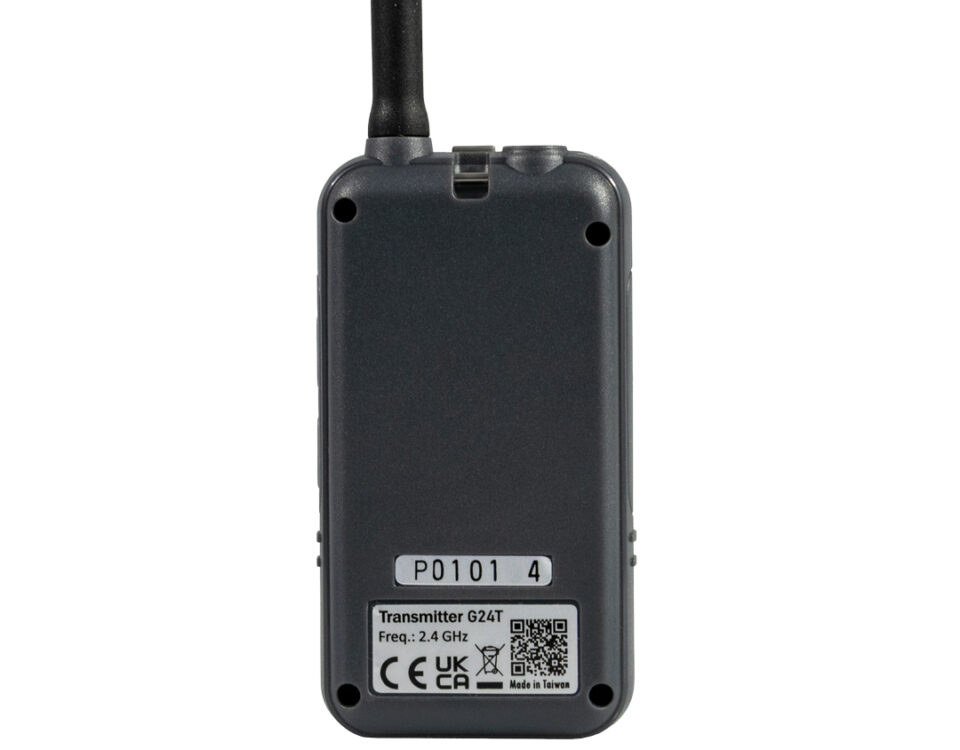
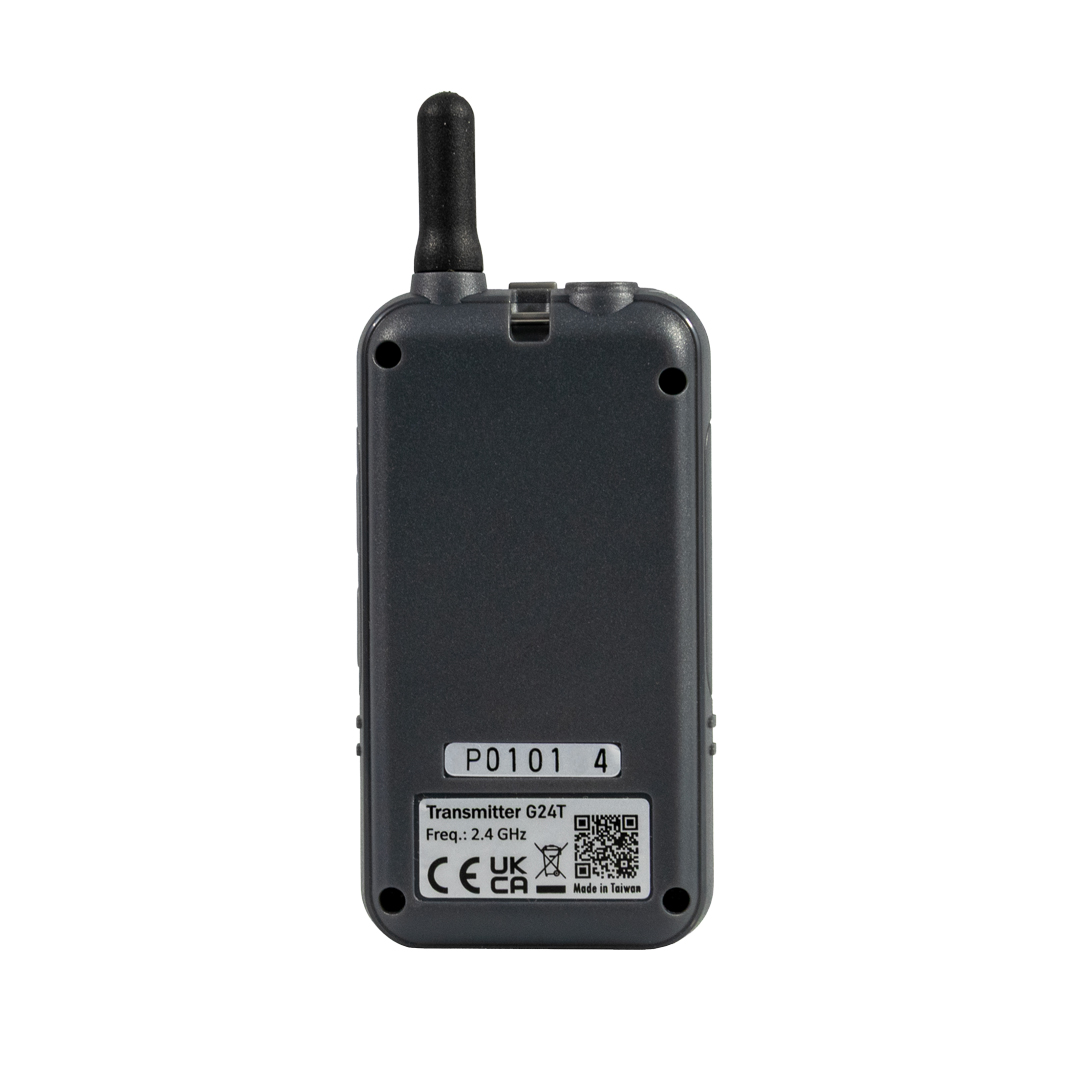
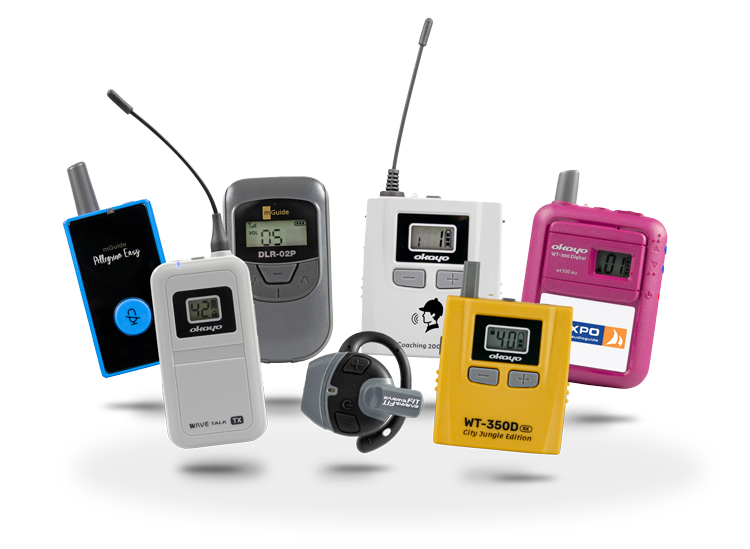
A tour guide system is a set consisting of a transmitter with a microphone and receivers with headphones. The guide uses the transmitter to lead the group, with each participant having their own receiver. Communication takes place in only 1 direction, i.e. from the transmitter to any number of receivers. Two-way systems also exist, but they are not very popular in tourist guiding.
Channels – tour guide systems usually have a minimum of them. 16. Channels are transmission frequencies permanently programmed by the manufacturer. In case of interference on 1 channel, the group can switch to another channel. This means that, for example, several guides with several (or even dozens of) groups can work in 1 facility or even room – each on a different channel. Different manufacturers set their channels to different frequencies. Channels also make it possible, for example, to conduct simultaneous translations.
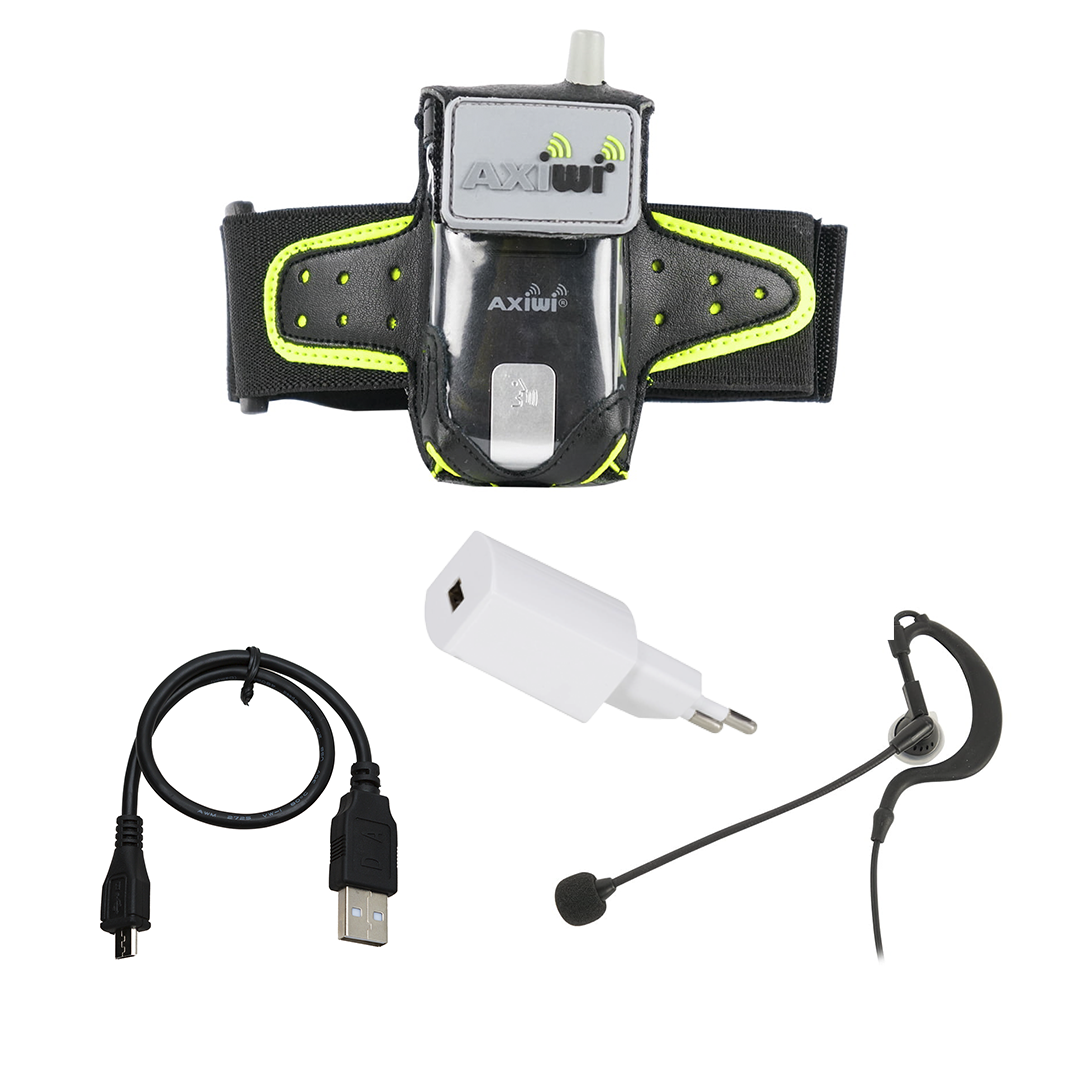
Charger – a device for charging batteries (AA rechargeable batteries or lithium-ion batteries) in receivers and transmitters. Since receivers and transmitters are equipped with special contacts, charging is done by placing the device in the charger pocket (slot).
Microphone – the microphone is connected to the guide/tour leader’s transmitter. Good systems have universal 3.5 mm jack microphone and headphone sockets. There are different types of microphones – lapel (clip-on) microphones that can be attached to a tie or collar, flexible – necklace or wrist-worn, but the best for guides are professional headset guide microphones with limited pickup range. Such a microphone will only “hear” what the guide says (even in a whisper), but not the sounds of what is happening around them.
Headphones – headphones are connected to tourists’ receivers. Headphones for tourism are almost always single-ear headphones. For safety reasons, as well as for comfort, the other ear should remain free. We distinguish between reusable and disposable headphones. The former should be non-invasive headphones (not entering the ear) to ensure minimum hygiene. However, only disposable headphones will ensure 100% hygiene.
Hygiene accessories – due to the frequent contact of tour guide devices and accessories with many users, it is worth paying attention to hygiene and keeping them clean. A wide range of products allows you to choose between disinfectant liquids and wipes, and hygiene covers.
3. Digital or Analog?
First of all, there is no difference in voice transmission quality between analog and digital models.
Digital systems usually have a shorter range (30-40 meters in line of sight) and greater power requirements (shorter battery life). However, in a digital model we can usually have a larger number of channels, which is important, for example, when equipping a large museum with a tour guide system, where 50 or more guides can work in 1 place simultaneously. Additionally, digital models are often equipped with a range of modern functions such as remote channel changing in receivers.
Some analog systems are no longer manufactured, which means their prices are rising and spare parts are increasingly difficult to obtain.
4. Don’t Be Afraid of Tour Guides
Tour guide receivers are often designed for ease of use so that the tourist does not have to worry about it and can fully enjoy the charms of sightseeing and being guided. So if someone can operate a phone, they can certainly operate a tour guide receiver. Operation is limited to turning it on, adjusting the volume, possibly changing the channel or turning it off, although now most models even turn off automatically when there is no transmission from the transmitter.
5. Comfort and Safety
Tour guide systems are already becoming standard in Polish travel agencies. They are also a significant saving, as renting equipment in Paris or Rome can be expensive. Meanwhile, in many museums the use of tour guides is mandatory, and recently some cities in Europe (e.g. in Croatia) have introduced mandatory group sightseeing with a tour guide system. This is quite understandable – for environmental reasons. Tourists go on trips to relax, yet the noise caused by even 1 loudly speaking guide in a narrow street, often still using a so-called “voice amplifier”, can be unbearable. In popular tourist locations, often not 2 but even more tours meet, so it’s easy to imagine what can happen there… The tour guide system allows you to avoid noise, chaos and introduces order. Sightseeing becomes discreet even in a church or other place of worship or solemnity.
Using a tour guide system is not only obviously convenient for both the guide and the tourist, but also safe. Often the group leader has an important organizational message to convey and it is important that everyone hears it well. When the group stretches over several dozen meters – there is also no cause for concern. Not only will everyone hear what the guide has to say, but they won’t get lost, and the guide, while narrating, signals where they are standing, so with a tour guide system you can also feel safe.
6. Purchase or Rental
Although tour guide systems have become significantly cheaper since they appeared on the Polish market, you should expect an expense of at least 9-11 thousand PLN net for a set for a 50-person group. Some smaller travel agencies are concerned whether the purchased equipment will be 100% utilized in the next season. It may then be worth considering equipment leasing, which in cases of occasional, irregular use may prove more financially advantageous.
For one-time rentals, a large rental company such as tourguidewynajem.pl will deliver and collect equipment from a specified location in Poland.
7. 2-in-1 Systems
2-in-1 systems are enjoying increasing interest, i.e. tour guide systems where the guide can support themselves at the appropriate moment with a previously recorded broadcast. What’s more, a 2-in-1 system can be used by a person replacing the guide, who at the appropriate moment will remotely launch the appropriate broadcasts for the tour (prepared earlier by an experienced guide).
2-in-1 systems such as Okayo OmniGuide have the ability to guide groups consisting of people speaking different languages. This is particularly important when serving tourist attractions visited by groups from different countries, on hop-on-hop-off buses, popular tourist trains or sightseeing on a ship or boat. The person guiding the group remotely triggers a broadcast at the appropriate moment, which each tour member will hear in their previously selected native language. Of course, broadcasts in different languages must first be written, translated and recorded, but such services are also available on the market in package form (e.g. at srv94205.seohost.com.pl/)
8. Choose New Solutions and Make Your Life Easier with Tourists
Manufacturers are introducing more and more conveniences for guides so that group guiding runs smoothly and is not interrupted by technical problems.
The most modern tour guide systems have a number of functions that can significantly facilitate and streamline every tour or guiding session. New tour guides such as Okayo OTG-102 can now be operated from a smartphone connected to the transmitter via Bluetooth. A dedicated application allows, among other things, adding and editing information about the user of each receiver, private conversation with a specific receiver, access to the battery status of each receiver, or setting alarms.
Thanks to new solutions, guiding a group is not only about talking about the sights, but also organizing it.
Expert Advice and Experienced Tour Guide System Users
- Do not turn on a second transmitter on the same channel as the first. Interference or lack of transmission will occur. Most 1-way systems can only transmit from 1 transmitter on 1 channel.
- Use equipment with references, avoid little-known brands. If a particular model or equipment is used by many companies, it is most likely because it is good.
- Use branded batteries or rechargeable batteries, preferably from industrial series. Don’t buy the cheapest ones on Allegro.
- Always have 1 extra transmitter per group. If you lose or damage the only transmitter during a trip – the remaining dozens of receivers will be useless.
- Buy/rent 1-2 more receivers than you need. Rarely, but it happens that a tourist loses a receiver (often it is later found).
- Mark your equipment with a sticker with your logo and website.
- Using disposable headphones streamlines organizational matters – you don’t have to use disinfectants after each tour, and also – which unfortunately happens – untangle tangled reusable headphone cables.
- Some operators leave the choice of headphones to the client – free reusable or disposable for a small fee.
- Good equipment is durable – sometimes there is simply no time to arrange receivers in a bag. When checking model references, also ask about housing durability.
- Buy from authorized dealers with appropriate warranty and service in Poland. Equipment should have a CE certificate, specified country of origin, available technical specification, manufacturer’s brand visible on the housing.
- Before you buy – rent, test the given model.
- After the season, it’s worth replacing soiled lanyards with new ones.
- Do you have a large company, many groups, destinations? Use disposable batteries and headphones. You’ll make work easier for tour leaders and yourself.
- Do you have an even larger company? Lease equipment long-term.
- Insure your equipment, it doesn’t have to be expensive at all.